After an eventful summer for the markets and policymakers, particularly in the bond markets, our podcast series regulars reunite to recap the major movements in the markets over the past few weeks. Listen further to discover what these market events mean for investors and our own investment views.
In this episode of Amundi Convictions, our host, Swaha Pattanaik, returns to the studio to speak with Monica Defend, head of the Amundi Investment Institute. They focus first on the sharp rise in global bond yields and the policy interventions that rattled markets over the summer.
Starting with Japan’s shifting monetary regime and the implications of yen and JGB moves, the episode also looks at the U.S. Treasury’s market operations and the limits of fiscal intervention.
Monica details the reasons behind Amundi's out of consensus call on the Fed, and what we expect for the ECB's next move in interest rates. Finally, the conversation closes with Amundi's investment views; why have equities and credit stayed resilient despite higher rates, what is driving the case for curve steepening, and what signals should investors be watching closely?
Concise, timely and highly relevant, this episode offers investors practical insight into navigating market volatility and policy shifts and how to identify the signals driving markets.
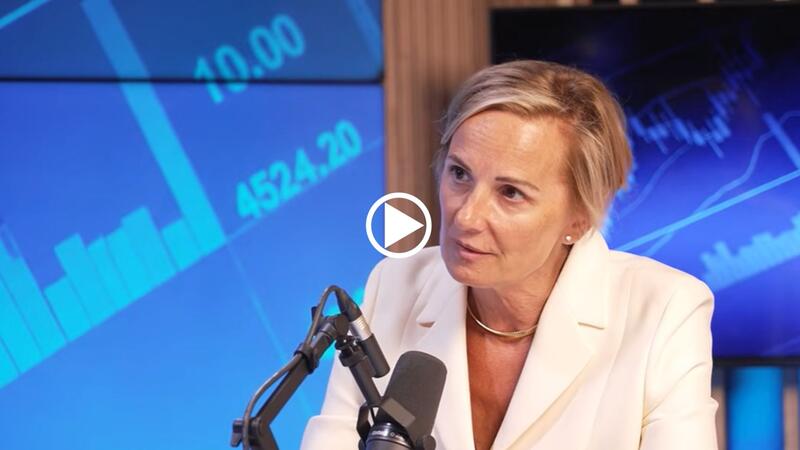
Also Available on Youtube:
Disclaimer: This podcast is only for the attention of professional investors in the financial industry. OuterBlue by Amundi. Welcome to OuterBlue Convictions, Market Analysis and Asset Allocation Views.
Swaha Pattanaik: Hello, and thank you for joining us for this Amundi Convictions podcast. I'm Swaha Pattanaik, the Head of Publishing at the Amundi Investment Institute, and it's my great pleasure to welcome Monica Defend, the Head of the Institute.
Monica Defend: Swaha, my pleasure.
Swaha Pattanaik: I think you managed to get away, but you were probably glued to the news, given the rapid changes in some of the policymaking stuff that's been happening. One of the key things that came up was intervention by the US Treasury, who probably even had less of a holiday than the rest of us. First of all, there was intervention jointly with the Bank of Japan on the yen. And then they decided to come in and intervene, so to speak, in the Treasury market. Can you give us a brief resume of what happened?
Monica Defend: What happened is that the bond market was volatile and rates in the long end in particular have been rising. We had more than 10 basis points on the 10-year treasury, 30 basis points on the bund. The Japanese government bond yield on the 10 years went above 3%, something we have not been seeing for a while, a long while. 30 years. So why do we worry about the long end? Because of the stock of debt that all of these countries have been piling up, in particular after the COVID pandemic. So what happened in Japan, there was this operation between the Treasury and Japan on the yen that was depreciating widely, I would say. They decided to move versus the euro, not the US dollar, which is something that caught us by far by surprise, I would say, provided that they didn't tell anything to the European authorities. But I think that we should frame this in a broader context when it goes to Japan, because we think that the Bank of Japan entered a real regime change. It is not just cosmetic. What we did have at the beginning of the summer, it was the end of June, beginning of July, was to start rethinking the forward guidance. So while before we were expecting 25 basis point hike every six months, we now expect 25 basis point four times from now to March 2027. And this is coming because all the burden of the change, that is a change in the economy, the fiscal impulse, is there. Everything is on the monetary policy shoulders. And we really need the Bank of Japan to trigger this regime change in a very orderly normalization, because what we realized is that Japan can export volatility into the interest rate markets. Why? Because this level of yield is now turning appealing to domestic investors. So possibly we can see eventually a repatriation, but also to international investors. So this is why probably Japan is one of the risks that I have. The Bank of Japan acting faster than what we are penciling is something that we will be closely monitoring. The second operation you are mentioning is again the treasury and Besant active on the market, on the government bonds. What it's been doing, we tend to read this as a market plumbing operation, but it has nothing to do to cure the debt, the debt servicing, the oversupply they have. And in fact, the market reaction eventually was quite muted. It faded over two days. What the US needs is fiscal discipline, a credible fiscal path that is difficult ahead of the midterm election. But this is, again, going, if not in competition, but creating probably some headache to Mr. Warsh at the Fed, because what they are doing is swapping the duration of the debt that the U.S. has. And one of the reasons why the market reaction was practical, so narrow in time, is the scale of the intervention. Because Besant announced $4 billion. He said we can move up to $64 billion, which seems to be big, but unfortunately it's just 1% of the treasury market. So it really doesn't change the chemistry.
Swaha Pattanaik: So you mentioned Kevin Warsh's headaches. He has a lot of them, don't we all?
Monica Defend: And he's creating us a lot of headaches.
Swaha Pattanaik: So you're feeling less sympathetic maybe towards him. But let me ask you, you had your Global Investment Committee yesterday, which everything is discussed, your views, the investment platform views. You sort of reiterated and confirmed your call on the Fed, which is out of consensus. Could you talk us through what your call is and why you think what you do?
Monica Defend: Yes. So we think the Fed will stay on hold for this year. Let's wait the inflation data. And I think this is something that the Fed will look closely at to see where it is going. Because according to our projections, core inflation and CPI are going to stabilize and then to correct on a downward trend in 2027. Actually, we have an expectation for core and CPI to stay 2.3, 2.1. by the end of 2027. While when we look at the growth numbers, it's decent growth. But if on the Fed radar screen they have the labour market, probably we have a more cautious reading that the simple 4.1 unemployment rate, the president, was pointing to in Jackson Hole. It's a low hire, low fire environment. The employment has been going down. Participation has been going down. The flows in the hiring market are quite limited. Let's see the non-farm payroll, if they confirm the negative figures that were published. in July. But under these conditions, we really think that an hike for the labour market would be a risk. We need to be more patient on that front.
Swaha Pattanaik: So let me put those two things together. You were talking about the structural problems, the fiscal structural problems, and also some of the problems that Mr Warsh faces, which is more affecting the short end perhaps. How have those two things over summer affected your views perhaps on the yield curve and where the value lies?
Monica Defend: Well, it confirms it, and we remain convinced about the steepening of the curve. Then the size of the movement is debatable. But when compared to the market, given our out-of-consensus call on the Fed, now the consensus aligns on the ECB but still there back in July we were saying we do expect an hike which is almost a deal done on the ECB. Duration wise, honestly given the uncertainty on the front end probably it's time to wait, but the front end given the difference between our expectation and the market pricing likely will be an interesting place to be.
Swaha Pattanaik: Thank you. So there's been global bond market moves, like the yields have been rising across the board. It's not, as you said, just a Japan problem, just a US problem. What is noticeable, however, despite this global movement, equity markets and credit have been pretty resilient to what's been a sizable move. Why is this? We had a good earnings season, but is it more than that? And how long do you think this resilience can go on for? What would you watch out for?
Monica Defend: Well, this is the how long is the key question that we are asking ourselves. So first, it is not the level of rates, it is the volatility of rates that really matters for the equity market. And it is true that we have seen the move index, which tracks the volatility in the bond market, has been rising. But compared to the past is really moving in a corridor. And when it goes to EPS growth, the reporting season was not only good, but the acceleration was broad. So it was involving sectors outside the hyperscalers. And this was not only in the United States. It is true for Europe. It has been true for China. So there is this solid growth on the earnings, but the market is questioning all these investments, if not all the investments, how is this funded and how it will pay down in terms of productivity growth. So it's not only earnings that matters, but also how all this hyper investment is going to pay down in terms of productivity gains. We are watching the forward guidance for 2027. The number of upward revisions is huge, beating expectations a bit lower. And the expectations for next year are still double-digit, but on a lower score when compared to what we have seen so far. Financing is really something to watch. We try to measure it by the Moody spread, which is the difference between the BAA and the AAA. The concentration in particular on the AAA has been changing over time, so it might be misleading but 43 basis points is really normality in the past when it was raising 75-80 basis points this was already flagging flashing red 100 is a systemic crisis but financing is something and hidden leverage is something that we will be watching.
Swaha Pattanaik: Thank you Monica. We are pretty much out of time.
Monica Defend: Already. Already.
Swaha Pattanaik: So much to cover. But thank you for joining us. And we look forward to seeing you next time in the studio.
Monica Defend: Thank you. Thank you so much.
Swaha Pattanaik: And thanks to you for joining us to tune in to this Amundi Convictions podcast. There are other podcasts on the Research Centre, including a really interesting research one on pensions. Do check it out. And we look forward to having you here next time.
Disclaimer: This podcast is only for the attention of professional investors as defined in Directive 2014-65-EU dated 15 May 2014 as amended from time to time on markets and financial instruments called MIFID II. Views are those of the author and not necessarily Amundi Asset Management SAS. They are subject to change and should not be relied upon as investment advice, as a security recommendation, or as an indication of trading. For any Amundi products or any other security, fund units or services, past performance is not a guarantee or indicative of future results.