
Summary
Geopolitics in 2027
We are now in a “Low Trust” world (Investing in a ‘Low Trust’ World) defined by multipolarity, shocks, and competition. Countries and companies will continue to reduce dependencies, increase self-sufficiency, and strengthen their defences. These factors should define investment themes, because high geopolitical rivalries and tech competition will define capital allocation. The main themes reshaping 2027 will be the likely continuation of current conflicts, and the downside risk that these conflicts spiral further.
Today’s environment displays characteristics we saw in the pre-war eras of the 20th century: multiple wars across geographies, major powers involved, trade chokepoints weaponised, and rising economic and political pressure in some of the world’s largest economies.
Most importantly, the war in the Middle East has allowed opponents to learn from watching these conflicts unfold – understanding the rival’s strengths and weaknesses. So more conflict, and intensifying economic warfare, are likely in 2027. The pockets of risk are well known: Russia/Ukraine, the Middle East, and tensions in the South and East China Sea.
Developments in the US will likely accelerate geopolitical tensions. A Democratic-controlled Congress means more policy gridlock for Trump’s final two years in office. At the same time, Democrats and Republicans will need to reinvent themselves ahead of the 2028 presidential election.
The US president is likely to focus on foreign policy, given that his room for manoeuvre at home is limited.
The situation between the US and Iran remains unresolved, and the underlying issues are hard to solve. The window for escalation remains open toward the end of the year, as more US troops arrive in the region. In 2027, Trump will face greater pushback in Congress.
If there is another round of escalation, it would likely affect regional energy infrastructure as Iran is likely to retaliate.
The conflict between Saudi Arabia and the Houthis is widening too, and may leave the Houthis with more strategic control of the Red Sea. Combined with Strait of Hormuz disruption, this would represent a further erosion of the principle of freedom of navigation. If there is an eventual agreement between the US and Iran, the ensuing deal would likely reshape the geopolitics of the Middle East.
As the US is overstretched and militarily weakened, downside risks have also increased in the South and East China Seas.
China, facing fewer constraints at home and seeing a weaker rival – while holding significant leverage over the global economy – may decide that now is a good moment to advance its geopolitical goals.
Similar dynamics are playing out between NATO, Europe, and Russia.
Our expectation is that the Russia–Ukraine war will continue into 2027. The risk of a limited operation against a European NATO country is also rising.
For now, Russia sees little reason to stop. Historically, a high oil price increased Russia’s appetite for military campaigns. Russia is also likely hoping for political change in Europe that could support its goals. In 2027 we will likely see an intensification of hostilities, alongside an intensification of diplomatic efforts.
Our base case for Europe is cautious optimism. 2027 will be a critical year for the bloc. Elections in France, Italy, Poland and Spain will be important to watch.
Despite the downside risks, we expect that, faced with significant external threats and limited domestic room for manoeuvre, political leaders will coalesce around a stronger Europe. Europe may still lag in the AI race, but it benefits from a commodity that is increasingly scarce: trust. That gives the bloc greater leverage.
Resilience will become key
For investors, the policy message is clear: geopolitical risks will remain high. That means inflationary pressures from those risks will remain elevated. Fiscal and monetary policy will likely remain geared toward national security.
A premium will be placed on trust, and diversification efforts will intensify. Things we once took for granted – access to energy, infrastructure, connectivity, freedom of navigation – will continue to be eroded.
In this environment, geopolitics will continue to shape the financial and economic ecosystem: public spending, central bank decisions, and supply chains. In short, expect more downside risks, high volatility, and the constant adaptation of the global economy. Resilience will become key. As a result, geopolitics will continue to fuel spending by companies and countries to prepare and adjust to a low trust world.
Geopolitics will likely not only affect markets, it will also determine where the money goes.
Explore the 2027 Outlook
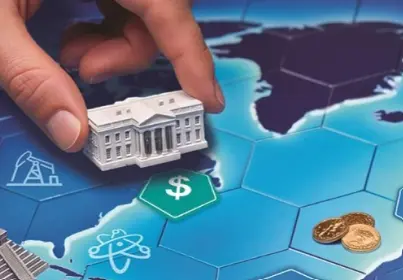
| Our 2027 outlook, “The Price of Power”, focuses on the costs and trade-offs of a macro regime shaped by five powerful forces and what they mean for investors. |
Authors